Author: admin

Fast Facts About Helmet Heat®

Throughout the winter season, snow and ice will often accumulate on your gutters. When this happens, water won’t be able to drain to the ground properly which can lead to gutter sagging and damage. They can also lead to ice dams, which are hard ice formations that form at the roof edge. They prevent the melted snow from draining off the roof, which can leak into your home and cause internal damage.

Gutter Helmet of Eastern Shore

But this can be avoided when you have a Helmet Heat® installed. To understand more about its features and benefits, Gutter Helmet of Eastern Shore, your best choice for gutter caps, shares their insight:

How Does Helmet Heat Work?

Helmet Heat is a separate but essential companion to the gutter guard system. It melts snow that may otherwise accumulate at your roof eaves and disrupt the water runoff. This also helps prevent ice dams from damaging your roof and gutters. They essentially minimize water damage and keep ice from forming in the first place! Consider having one installed on your home if you’re looking for a cost-effective and economical solution to your ice dam problems.

Features and Benefits

Once Helmet Heat is installed, it usually does the work for you. It uses a self-regulating heat cable to keep your gutters at a temperature warm enough to prevent the accumulation of snow and ice buildup. Too much ice can affect your gutter’s performance, after all, and Helmet Heat ensures the snowmelt drains safely in your downspouts.

Since Helmet Heat prevents ice buildup, there won’t be any unsuspecting damage to your home’s property as well as injury to anyone passing below. It also adjusts to the climate and has an outer jacket to ensure that the cables are not too hot to touch. It won’t even be visible since it’s installed beneath your gutter covers, which means your roofline is kept intact!

Be sure to check out Gutter Helmet of Eastern Shore to know more about helmet heat, gutter caps, and other gutter protection products. Just call us at (866) 333-8150 or you can fill out our convenient online request form to get started. We serve our customers in Maryland, including Salisbury and the surrounding areas!

The post Fast Facts About Helmet Heat® appeared first on Gutter Helmet.

Gibraltar 2021 Investor Day: Residential

Gibraltar Industries (the manufacturer of Gutter Helmet®) is a leader in established markets and drives a diverse set of companies. We build businesses that make an impact on the world, in good times and bad. We know that it’s the collective strength of our dedicated employees that is the driving force behind our success. When the pandemic first hit, we met the challenge to help keep our families and our communities safe. We are now focused on continuing to provide products that make homes more comfortable and functional, and enable renewable energy and greenhouse productivity.

Gibraltar Residential Business

At the end of the year, we held our 2021 Gibraltar Investor Day. As part of the presentation, Vice President and General Manager of Ventilation Gene Laminak discussed our residential building products group. Along with outlining past performance and projected growth in this segment, he covered how our abilities and core competencies in developing products and solutions help us protect families and serve our customers.

In addition, Gene shared a video in which General Manager Jeff Bedard outlines why home improvement is more important to homeowners than ever:
“Homeowners spend about 450 billion dollars a year on home improvements, and the reason is that for most of us, it’s the most important asset we own. It’s also where we spend most of our time. Especially today, more than ever, we live at home, we work at home, we school at home–and now we even vacation at home. With the residential group, our people, solutions, and technology advance quality of life by protecting what matters and providing peace of mind.”

Check out the full video of the Gibraltar 2021 Investment Day presentation.

How Roofing Accessories Ensure Comfort & Efficiency

As VP and GM of Ventilation, it’s no surprise that Gene Laminack is well-versed in the role a strong roofing system plays in protecting your home. This includes having high-quality roofing accessories — such as ventilation, trims and flashings, connectors and gutter protection — installed on your house. These are all essential in preventing water from penetrating your home and creating an environment conducive to mold and mildew growth, which is not only unsightly but can also damage building materials and pose a health risk. Our team in the roofing accessories division is even working on developing a new product — currently patent-pending — that helps channel water away from pipe boots, which is the top-leaking item on a roof.

Gibraltar Strong

Our top-notch residential building product program is just one of the things that sets us apart. At Gibraltar, we also give our investors the tools they need to make a difference. To find out more, please visit our investor page.

The post Gibraltar 2021 Investor Day: Residential appeared first on Gutter Helmet.

Gutter Cleaning for Commercial Buildings

Residential properties are not the only ones that benefit from a rain gutter system. Commercial buildings are no exception. Although rainwater is very beneficial to the environment, it can be damaging to buildings that are not protected by a gutter system by causing eventual deterioration of the roof, walls, and foundation. Cleaning the gutters of your commercial building is important to keep them…

Source

This post first appeared on https://gutterpros.com/

Why Seamless Gutters Are Worth Every Penny

Good rain gutters are crucial when it comes to protecting your home and landscaping from water infiltration and damage. If your gutter and drainage system isn’t performing well or is just old and needs to be replaced, you’ll need to decide between two options for the best rain gutter system: sectional and seamless gutters.

Sectional vs. Seamless Gutters

Sectional gutters are made up of short sections of guttering that are connected and fastened at the seams. They can typically be purchased at big-box home improvement stores in 10-foot sections. Sectional gutters are attractive to many homeowners because they’re slightly less expensive and are simple to install, which means even a novice homeowner can easily DIY a gutter installation project. 

Seamless gutters, on the other hand, are constructed using specialized equipment and are often formed on-site. The sections are much bigger because they’re all in one piece, and when attached only have seams at jointed points (usually at the corners). This means installation is more difficult and often requires more than one person, as the sections are generally too long for one person to handle alone. 

The Benefits of Seamless Gutters

While seamless gutters do cost more upfront for materials and installation, they also provide many benefits over traditional sectional gutters, mainly due to the fact that there are far fewer seams and joints. Here we delve into some of these benefits: 

  • Fewer leaks, clogs and backups. The more joints and seams your gutters have, the greater the likelihood that leaks will occur at these junctures. In addition, the need for fasteners and caulk/sealant at each joint can slow the flow of water and even lead to blockages as leaves and other debris get snagged by the fasteners. One way to reduce such occurrences and keep your gutters and downspouts clear is to install Gutter Helmet® gutter guards on the gutters. 
  • Less maintenance. Fewer seams and joints equal less maintenance. This is because seamless gutters accumulate less debris, which means less gutter cleaning is required. Meanwhile, more seams equals more sealant. Even high-quality sealant will break down over time and have to be replaced, which means sectional gutters will require a lot more maintenance than seamless gutters. 
  • Custom fit. As mentioned previously, seamless gutters are shaped, usually on-site, using specialized equipment, which means each seamless gutter system is fashioned for that particular home. As such, each homeowner is guaranteed a perfect, custom fit, which is essential because gutters that fit well will also function well.
  • Greater strength. On average, seamless gutters are much stronger than sectional gutters. This is because seamless gutters, which are formed using a gutter machine, are usually contractor grade and available in .027-inch and .032-inch thicknesses. In contrast, the cheaper sectional gutters you can get from home improvement stores are typically thinner, with a thickness of .024 inches. In fact, these gutters can be more than 20% thinner than contractor-grade gutters, so it’s no surprise that they don’t hold up to the elements nearly as well.

Enhance Your Gutters With Gutter Helmet® Gutter Covers

To find out how Gutter Helmet’s exceptional gutter protection system can make your seamless gutters even better, give us a call today at (800) 824-3772 or submit our online contact form.

The post Why Seamless Gutters Are Worth Every Penny appeared first on Gutter Helmet.

Continuous Gutters: What You Need to Know

Throughout the years, gutters have changed and advanced, offering more profiles and options to make gutters look more appealing. Due to these changes, continuous gutters, or seamless gutters, have been created. They signify an improvement on all fronts, including the amount of water they can hold and their durability against outside elements. So, what exactly are continuous gutters, you might ask?

Source

This post first appeared on https://gutterpros.com/

What Is the Difference Between Gutters and Downspouts?

A property’s gutter system is one of the most taken-for-granted exterior components. Property owners expect the system to capture roofGutter and Downspout runoff water effectively, with gutters taking said water to the downspouts where it can be safely discharged away from the foundation. A properly functioning gutter system helps properties avoid foundation issues and potential water intrusion. However, an improperly functioning system poses some significant threats.
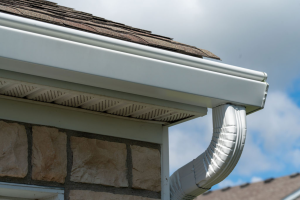
In this post, we’re going to take a look at two key components behind any well functioning gutter system: gutters and downspouts. We’ll discuss the key differences between these two components and also share information on how to properly maintain each so that your gutter system can continue to operate efficiently and effectively. Here’s a closer look at what you need to know:

Gutters vs. Downspouts: What’s the Difference?

Both gutters and downspouts are both a part of your property’s gutter system, which is designed to discharge snowmelt and rainwater runoff safely away from your home. However, gutters and downspouts are different in the functions that they serve. In this section, we’ll take a closer look at the different – yet equally important – roles that each of these components serve.

Gutters

Gutters run horizontally along the entirety of the roof edge and capture water runoff as it leaves the roof line. Gutters then work to direct this water to the downspouts, where it is discharged away from the home. However, gutters must be installed properly in order for them to work effectively. For instance, they must be pitched so that once water enters, it can travel to the downspout. Most recommend a gutter pitch of about a quarter inch for every 10 feet worth of gutter length, making proper installation important. Gutters typically install right into the fascia of the property.

Without gutters, water would run off the roof of your property and pool up around the foundation. This could lead to a bevy of problems, such as foundation erosion, and water intrusion and mold growth.

Downspouts

Downspouts are components that run vertically. They connect at the end of the gutter and work to discharge water safely away from the property and its foundation. Downspouts have elbows to help disperse the water and are typically installed into the likes of porch columns and exterior siding or brick to keep them stable and secure as water flows down them.

It’s typically suggested that downspouts are installed in a manner so that water is dispersed at least 10 feet away from the property foundation to avoid water intrusion or foundation erosion issues. The exception is if the land is graded away from the property where the downspouts are installed. In some cases, downspout extenders may need to be installed so that water can safely drain away from the property.

Bottom line: Gutters capture the water and send it to the downspouts. The downspouts finish the process by discharging water away from the property.

Gutter and Downspout Maintenance

Now that we’ve gone over some of the key differences between gutters and downspouts, it’s time to focus on one key similarity between the two components: They both need to be properly maintained in order to ensure that your gutter system is working effectively and efficiently. And there are some key considerations and tips that you want to keep in mind when it comes to gutter and downspout maintenance. Here’s a look at what you need to know when it comes to proper maintenance of gutters and downspouts:

They should be cleaned out at least twice a year

It’s usually best practice to clean out your gutters and downspouts in the early spring and then again in the late fall. Remove any leaves, twigs and other debris to ensure that water can properly travel through your gutters to your downspouts and then discharge appropriately from the downspout. When you’re cleaning downspouts, pay special attention to the elbow joints, as these are the areas where debris tends to accumulate and clogs tend to occur.

If gutters and downspouts clog, it means that the system can’t discharge water appropriately. This could result in overflowing gutters and possible damage to your property. It means that ice dams are more likely to form during the winter months. And it means that your gutter system could suffer damage as well, impacting its ability to perform even when it is properly cleaned.

Gutter guards can help

Don’t like cleaning out your gutters or paying someone to do it for you? Gutter guards can help. These components install over gutters and help prevent the likes of leaves, twigs and other debris from entering your gutter system, thereby preventing clogs and obstructions while water is able to still freely flow through the gutters and downspouts. In addition to reducing maintenance, gutter guards can also increase the value of your home and make it more attractive for potential buyers should it hit the market.

Check for leaks, joint problems

The most problematic parts of a gutter system are where joints connect the different components. These areas can come loose over time and separate, resulting in leaks. There are a few tried and true ways to resolve joint problems. The first way is via preventative maintenance and ensuring that your gutter system is free of clogs. This is because joint areas of gutters often separate due to the weight of the water when clogs are present in the system. And two, you can visually inspect joint areas for problems. Just grab an umbrella the next time it rains, step outside and take a walk around your home to ensure the system is operating efficiently and effectively. Take note of any leaks and ensure the proper repairs are made before the next expected rainfall.

Contact K-Guard

For more information on the differences between gutters and downspouts, and to learn more about gutter guards and other ways to maintain your gutter system, contact K-Guard or one of our distributors today.

This post first appeared on https://www.kguard.com

Considerations to Help You Choose the Right Gutter Cover

Gutter covers are a fairly simple concept. They can be in the form of a cover or an insert that fits over or into gutters to keep out unwanted materials like leaves, twigs and other debris — basically everything except water. They’re meant to help keep your gutters clean, clear and functional. Even though the design of most gutter covers is simple and straightforward, it can still be overwhelming to look at all the available options and choose the one that will work best for you. 

To help you out, we’ve provided a few tips to keep in mind that will help you choose the best gutter guards for your situation.  

  • Determine gutter size and style. Most homes in the U.S. have gutters that are either 5-inch or 6-inch, though if you live in an area with high annual rainfall totals, your gutters could go up to 7 or 8 inches in width. If you’re not sure of the size, just measure across the gutter opening. As for the style, your gutters are most likely either half-round (U-shaped) or K-style (noticeable corners). 
  • Gutter covers vs. inserts. You need to be very careful and do plenty of research when choosing between gutter covers and gutter inserts. Gutter covers are positioned directly over the gutters and keep out leaves and other debris while still allowing water to flow into them. Other types of gutter guards, on the other hand, are simply foam or brush inserts that sit directly in the gutters and prevent certain types of debris from entering the system. While gutter covers are easier to clean, gutter inserts are easier to install on your own, which can be attractive to homeowners who prefer DIY installation.
  • Look at the types of debris in your gutters. Think back to the types of debris that were most prevalent in your gutters the last time you cleaned them. Did you only see leaves and twigs, or were you dealing with pine needles and seed pods as well? You may even have noticed animal nests. When selecting a gutter cover, you’ll need to take all this into consideration, as it’s critical that you choose one that’s made to filter out the debris you encounter in your specific area. For example, some gutter covers that are designed to keep out leaves are much less effective at keeping out pine needles. To find the style that will work best for you, all it takes is a little research.  
  • Consider your budget. Gutter guards range in price, depending on the materials used to make them. Gutter inserts, for instance, cost significantly less than gutter covers that are installed directly over the gutters. In addition, plastic covers are cheaper than those made of metal, while screens tend to be slightly less expensive than specialty covers. While choosing one of these cheaper alternatives will be easier on your budget, just remember that they’re also often less durable and don’t hold up to the elements as well.  

What Makes Gutter Helmet® the Best

For the best quality and value, choose a Gutter Helmet® gutter protection system. Our covers have a ribbed, textured surface with a Permalife™ finish and unique nose-forward design that passively draws water into the gutters while moving any debris over the edge and down to the ground. In addition, our system comes with a Triple Lifetime Warranty! To find out more and get a free, no-obligation estimate, give us a call today at (800) 824-3772 or contact us online. 

The post Considerations to Help You Choose the Right Gutter Cover appeared first on Gutter Helmet.

4 Surprising Reasons to Inspect Your Gutter Hangers

While gutter hangers may seem like some of the least important components of your gutter system, they’re actually vital if you want your gutters to function smoothly and efficiently. Their  job is simple: keep the gutters firmly in place at the appropriate angle to catch the rainwater and snowmelt draining off your roof and move it away from your house. If you fail to inspect the hangers regularly and allow them to sag or break, you could be looking at big problems and bigger repairs down the road. In this post, we cover the main reasons why it’s important to inspect your gutter hangers regularly and repair them in a timely manner when needed. 

Why Regular Gutter Inspection Is So Important

  • Sagging gutters can’t channel water properly. The gutters have to be properly angled in order for water to flow through them freely. This will prevent it from seeping under the shingles, spilling over onto the landscaping or pooling around and damaging the foundation. The required angle is very slight, and it doesn’t take much to throw it off — a loose or bent hanger can completely disrupt the system, causing the gutters to droop and rendering them ineffective. 
  • Broken hangers can damage your home. If your gutter hangers aren’t securely fastened to your house, they can cause significant damage to the roof sheathing and even pull down fascia boards as the hangers become detached. If they’re fastened directly to the side of the house and the gutters start to sag, the hangers will pull the siding down with them, creating an eyesore that will be expensive to fix. 
  • It can affect your health. When your gutters aren’t functioning correctly, water tends to back up in them. This can lead to a number of health concerns, such as mosquitoes breeding in the pooling water and mold growth that can exacerbate existing respiratory problems or lead to other health issues.  
  • One loose hanger can lead to more. The hangers supporting your gutters are spaced evenly along the system so that the weight of the gutters (as well as the weight of any water they hold) is distributed equally around the house. If one hanger becomes loose, more pressure is put on the remaining ones, until eventually they’ll start to loosen as well. This is why it’s essential to stop sagging gutters by repairing or replacing loose or broken hangers as quickly as possible. 

Gutter Helmet® Can Help Protect Your Gutter System

Gutter protection systems help prevent damage to gutters by keeping them clear of leaves and other debris, thus reducing blockages that can lead to backed-up water and heavy clogs that will add more weight and stress the gutters. To find out how a Gutter Helmet® system can help keep your gutters and gutter hangers in good shape, contact us by calling (800) 824-3772 or submitting our online contact form.

The post 4 Surprising Reasons to Inspect Your Gutter Hangers appeared first on Gutter Helmet.

The Most Common Signs of Water Damage to Your Foundation

Foundation Water DamageHave you noticed new cracks developing in your home’s foundation? Although a number of different factors can contribute to these cracks, one of the most common causes of a cracked foundation is water damage. If your downspouts don’t discharge rainwater far enough from your home, it can pool around the foundation and cause damage that is expensive and difficult to repair. Learn more about how to spot signs of water damage on your foundation below!

Discoloration on Basement Walls

When water seeps through your foundation, it can cause discoloration on interior basement walls. If you notice water streaks and spots appearing on the walls of your basement, it could be because they’ve become saturated with moisture from outside.

Musty Odors

Does your basement have an unpleasant smell that just won’t go away? Does it seem to get more noticeable on rainy days? These musty odors are another common sign of moisture-related issues in basements. Installing a dehumidifier can help, but you should also make sure your downspouts are unclogged and oriented in a direction that carries rainwater safely away from the foundation.

Mold Growth

If rainwater is pooling around your foundation, those musty odors in your basement may be accompanied by mold growth, too. If you spot dark patches of mold growing in damp corners of your basement, you could have a budding moisture problem on your hands.

If your gutters and downspouts are failing to protect your home from water damage, the team at Bell Seamless Gutters would be happy to lend hand. Our custom seamless gutter systems offer an attractive, low-maintenance and efficient way to divert rainwater away from your home. Give us a call or contact us online to learn more today!

The post The Most Common Signs of Water Damage to Your Foundation appeared first on Bell Seamless Gutters.

Should Your Gutters Be Longer Than Your House?

When it comes to installing gutters on your house, there are many things to keep in mind. As a homeowner, you should think about things from materials to the most fitting gutter profile. One aspect that should be discussed prior to installing gutters is the size and dimensions. These two features are defining factors because they will be important for the gutter to work right. Keeping that in mind…

Source

This post first appeared on https://gutterpros.com/

This website nor its owners are an actual service provider, this website is a referral service. When you place a phone call from this website, it will route you to a licensed, professional service provider that serves your area. For more information refer to our terms of service.

© GutterServiceNearMe.com

(877) 959-3534